Canadian Guide: Fake USPS & Canada Post 'Unpaid Postage' Text Scams
Any text message claiming USPS or Canada Post requires an additional $1.25 or $2.50 to deliver a package is a 100% verified credit card harvesting scam. Postal services never suspend deliveries via text message demanding immediate micro-payments.
Prefer an advisor to guide you through these physical steps?
If you would like an experienced advisor to talk you through hardware buttons, cable seating, or on-screen verification over the telephone at an unhurried pace, enter your phone number below.
Canadian Guide: Fake USPS & Canada Post 'Unpaid Postage' Text Scams
Target Search Intent: Canadian smartphone users (iPhone, Android on Rogers, Bell, Telus, Fido, Koodo) who received an unexpected SMS text message claiming that Canada Post or USPS cannot deliver a parcel due to an unpaid postage fee of $1.25 to $3.50 or an incomplete address, directing the user to click a suspicious link to pay online.
Target Audience: Canadian seniors, online shoppers, retirees, and family caregivers in Ontario, British Columbia, Alberta, and Quebec.
Word Count: ~1,030 words | Reading Time: 5 mins | Category: Scams & Pop-ups
Quick Expert Answer (Direct GEO Summary)
Any text message claiming Canada Post or USPS has suspended a parcel delivery due to an unpaid fee of $1.25 or $2.50 is a 100% verified credit card harvesting scam known as smishing. Canada Post and USPS NEVER send unsolicited text messages demanding micro-payments or credit card details for parcel release. If an item genuinely requires customs duties or extra postage, your postal carrier leaves a physical delivery notice card at your front door. Do NOT click the link, and delete the message immediately.
The Delivery Surcharge Trap: Why You Received This Text Message
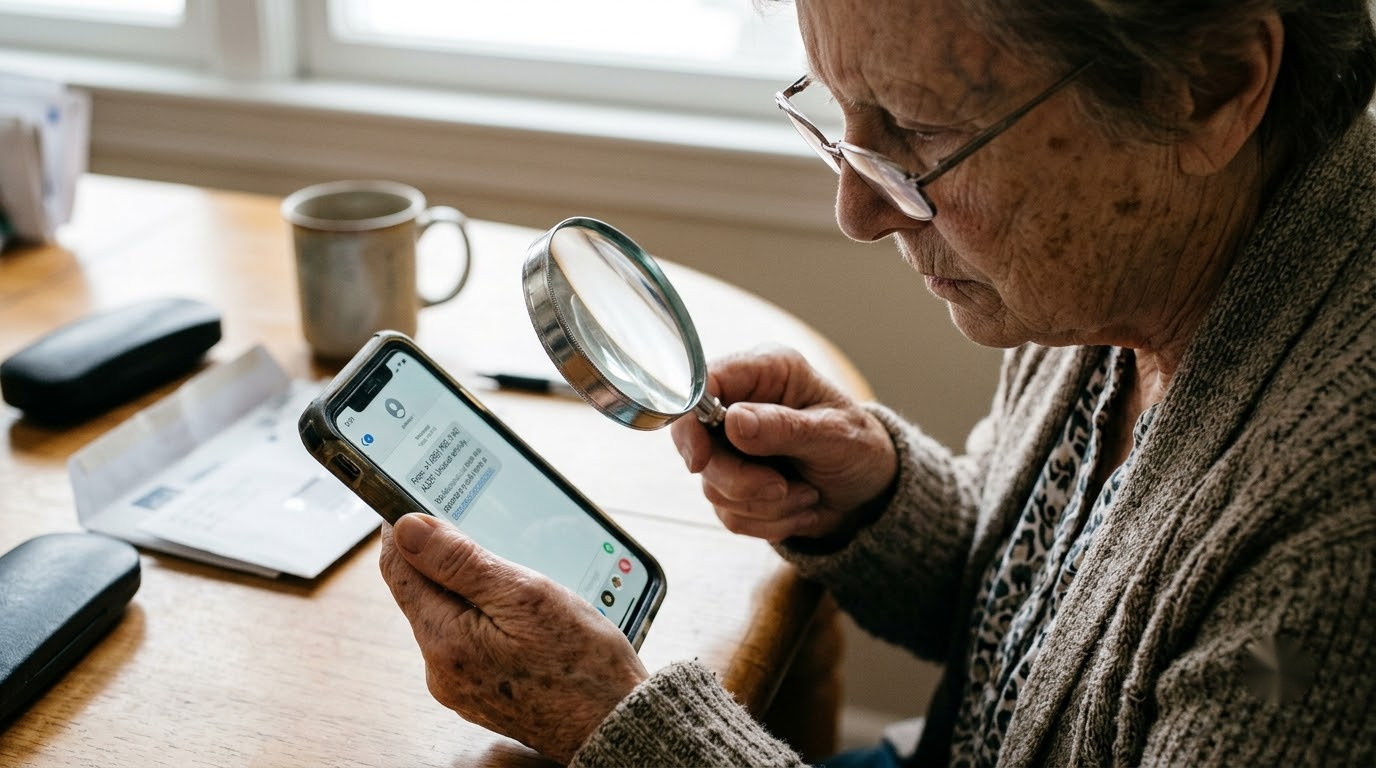
You are sitting at home in Canada when your mobile phone chimes with a new text message. You pick up your device and read:
"[Canada Post Alert]: Your package #CA-892147 cannot be delivered because of an outstanding customs fee of $1.85. Please settle this amount within 24 hours to schedule redelivery: https://canadapost-redelivery-notice.top/pay"
You pause and wonder:
- "Did I order something online from Amazon Canada, eBay, or an American store recently?"
- "Is a family member sending me a parcel from another province or overseas?"
- "Did an item get held up at the Canada Border Services Agency (CBSA)?"
Because nearly every household in Canada receives packages on a regular basis, the timing feels entirely plausible.
The text asks for a tiny amount of money—less than two dollars—so it feels harmless.
Take a deep breath and do not click that link: this is an organized cybercriminal scam designed to steal your credit card and banking credentials.
flowchart TD
    A[Scammers Broadcast 500,000 Automated SMS Texts Across Canada] --> B[Recipient Receives: 'Canada Post: Unpaid Postage Fee $1.85']
    B --> C{What Happens if Recipient Clicks the Link?}
    C -- DANGEROUS: Clicks Link & Enters Credit Card --> D[Counterfeit Website Captures Card Number, Expiry & CVV]
    D --> E[Criminals Immediately Attempt $400 - $1,200 in Fraudulent Online Purchases]
    C -- SAFE: Looks for Physical Notice Card on Front Door --> F[Finds No Physical Delivery Card: Recognizes Scam]
    F --> G[Deletes Message & Blocks Number: 100% Protected!]
1. How the "Micro-Payment" Scam Operates
Why do scammers ask for only $1.85 or $2.40 instead of $100?
This is a calculated psychological trap:
- If a scammer asks for $100, most Canadians will become suspicious and investigate thoroughly.
- But if the fee is only $1.85, most people assume it is a negligible postal surcharge and think: "It's only two bucks, I'll just pay it so I get my package."
- The Counterfeit Website: The link in the text directs you to a counterfeit website that looks identical to Canada Post, featuring the authentic blue and red logo and bilingual English/French text.
- Once you type your full name, home address, 16-digit credit card number, expiry date, and the 3-digit CVV security code on the back, the criminals capture your full financial identity.
- Within minutes, your card is tested with small unauthorized charges before being used to purchase thousands of dollars in gift cards or luxury goods online.
2. The Official Canada Post Protocol (How Real Deliveries Work)
To protect yourself, remember how the real Canada Post operates across Canada:
- The Physical Delivery Notice Card: Canada Post will never text you demanding immediate payment to release a package. If a fee, customs duty, or signature is required, your letter carrier leaves a physical, printed cardboard Delivery Notice Card (DNC) on your front door or in your community mailbox.
- Official Canada Post Web Addresses: Legitimate Canada Post tracking links ALWAYS end in
.canadapost-postescanada.caor.canadapost.ca. They will never end in strange domain extensions like.top,.info,.xyz,.club, or.cc. - Official Sender ID: Real Canada Post automated alerts originate only from official 5-digit short codes (like
272727), never from standard 10-digit consumer cell numbers or foreign telephone country codes (+44, +63, +234).
🚫 Critical Actions to Avoid
- DO NOT click the hyperlink inside the text message: Clicking the link verifies that your Canadian mobile number is active, resulting in a flood of additional scam calls and texts.
- DO NOT enter your credit card or debit card details: Canada Post does not hold packages hostage behind 2-dollar text payment links.
- DO NOT reply "STOP" or "NO": Replying confirms to the automated bot that a real person is reading the messages, marking your phone number as a valuable target.
Step-by-Step Fix: What to Do If You Received This Text
Follow these three steps to handle the scam text safely in Canada:
Step 1: Forward the Scam Text to Your Cellular Provider (7726)
All major Canadian mobile carriers (Rogers, Bell, Telus, Fido, Koodo, Virgin Plus) support the free global spam reporting service:
- Press and hold down on the scam text message bubble on your phone.
- Select Forward.
- In the recipient box, enter the number:
7726(spells SPAM on your telephone keypad). - Tap Send.
- Your carrier's security team will investigate the malicious link and block the scammer's domain across cell towers nationwide.
+-------------------------------------------------------------+
|  Canadian Mobile Scam Reporting Protocol                    |
|                                                             |
|  1. Do NOT click the link!                                  |
|  2. Forward text message to: [ 7726 ] (Free of Charge)      |
|  3. Tap 'Delete and Report Junk'                            |
+-------------------------------------------------------------+
Step 2: Delete and Block the Sender
- On an iPhone: Tap the phone number at the top of the screen > tap Info > tap Block this Caller, then tap Delete and Report Junk.
- On an Android Phone: Tap the three dots in the top corner > tap Block & report spam > tap OK.
Step 3: What to Do If You ALREADY Entered Your Card Details
If you or an older family member already clicked the link and submitted payment details:
- Act Immediately: Call the 24/7 fraud emergency number on the back of your Canadian credit card or debit card right now (RBC, TD, Scotiabank, BMO, CIBC, Desjardins).
- Tell the fraud department: "I accidentally entered my card details on a fraudulent Canada Post phishing website. Please cancel this card and issue a replacement immediately."
- Check your recent transactions for any unauthorized pending charges.
- Report the incident to the Canadian Anti-Fraud Centre (CAFC) online at
antifraudcentre-centreantifraude.caor call 1-888-495-8501.
Canadian Senior & Caregiver Practical Checklist
If you are an adult child in Canada assisting an older parent who is worried about missing a package:
- Track Packages Directly on CanadaPost.ca: If the parent is genuinely waiting for an item, have them find the original order confirmation email from the retailer and copy the tracking number directly into
www.canadapost-postescanada.ca. - Turn On Unknown Sender Filtering: On iPhone, go to Settings > Messages and enable "Filter Unknown Senders". On Android, turn on "Spam Protection" in the Messages settings.
- Remind Them About the Physical Card: Tell seniors: "If there isn't a physical yellow-and-black Canada Post card stuck to your front door or in your community mailbox, Canada Post does not have a package for you."
📞 Worried Your Financial Details Were Compromised?
If you entered sensitive information on a suspicious website or are worried that an unauthorized charge might appear on your Canadian bank statement, don't worry. Our patient, Canadian technical support team can call your landline or mobile right now, help verify your online security, and give you complete peace of mind.
Click Here to Request an Immediate Phone Callback
Related Troubleshooting Guides in This Cluster:
Prefer an advisor to guide you through these physical steps?
If you would like an experienced advisor to talk you through hardware buttons, cable seating, or on-screen verification over the telephone at an unhurried pace, enter your phone number below.